
· Hien · 5 min read
ChatGPT Creates a New MCP Session for Every Tool Call. Claude Doesn't.
I caught ChatGPT and Claude red-handed using the same MCP server completely differently. One creates a fresh session per tool call. The other reuses one. Here's the data from the proxy dashboard, and why it matters for every MCP server developer.
I caught something weird.
I’m building mcpr, an open-source proxy for MCP servers. The cloud dashboard tracks every MCP request at the protocol level, including session lifecycle. Initialize calls, tool invocations, session IDs, latencies. Everything.
While monitoring a production MCP server that serves both ChatGPT and Claude simultaneously, I noticed a pattern that made me do a double-take:
ChatGPT: 2 tool calls. 2 separate sessions. Claude: 2 tool calls. 1 session.
Same server. Same tools. Same protocol. Completely different behavior.
Let me show you.
The raw data
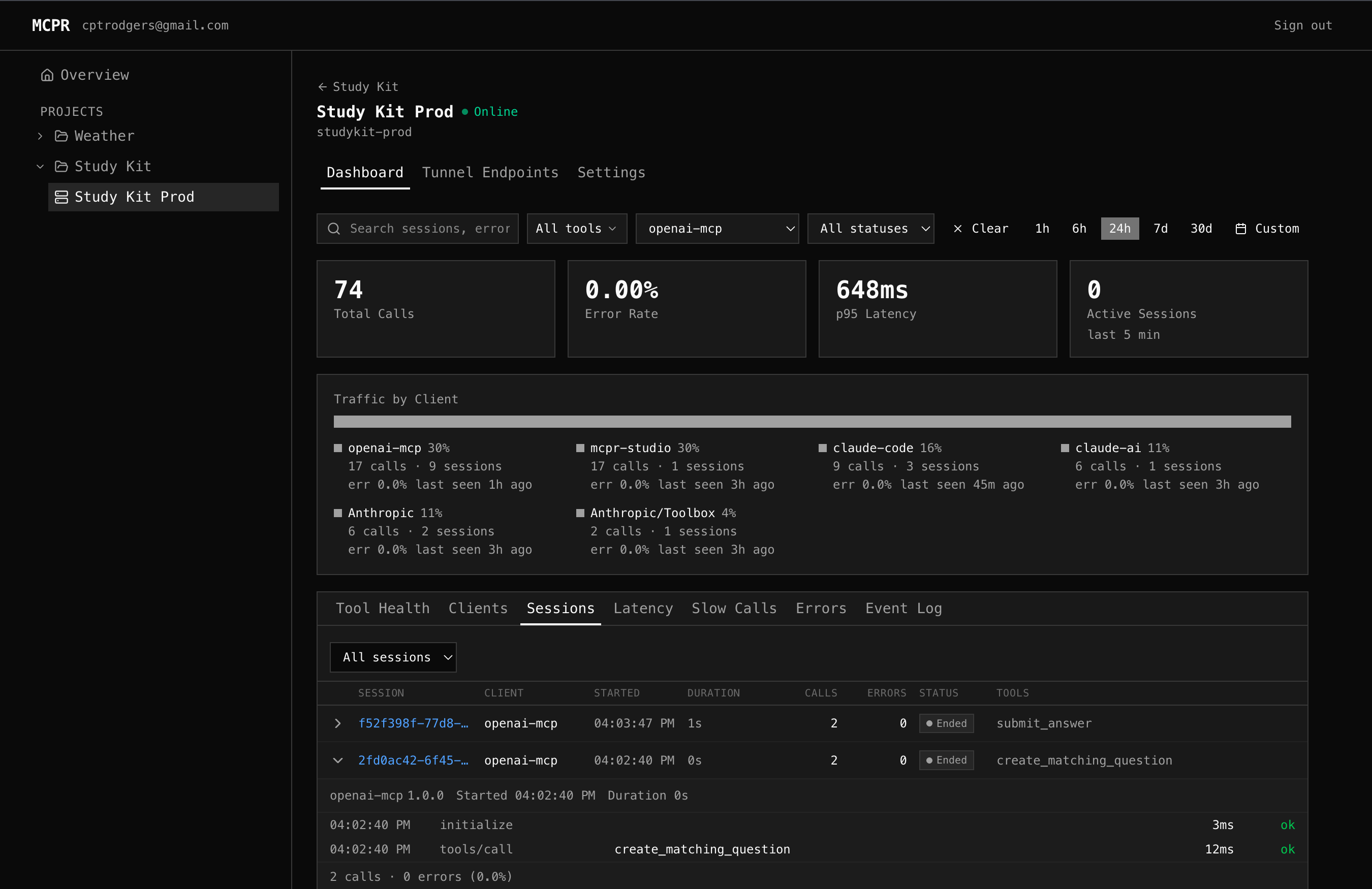
Here’s exactly what the dashboard recorded for a simple interaction where the AI calls two tools back-to-back. You can reproduce this with any MCP server you have running: point both ChatGPT and Claude at it and watch the session IDs.
ChatGPT: one session per tool call
Session 1:
  04:02:40 PM  initialize              3ms   ok
  04:02:40 PM  tools/call  create_matching_question  12ms  ok
  -- session ended --

Session 2:
  04:03:47 PM  initialize              3ms   ok
  04:03:47 PM  tools/call  submit_answer            12ms  ok
  -- session ended --
Two sessions. Two full initialize handshakes. Each session lives for roughly one second, just long enough to shake hands, call a tool, and disappear.
Claude: one session, many calls
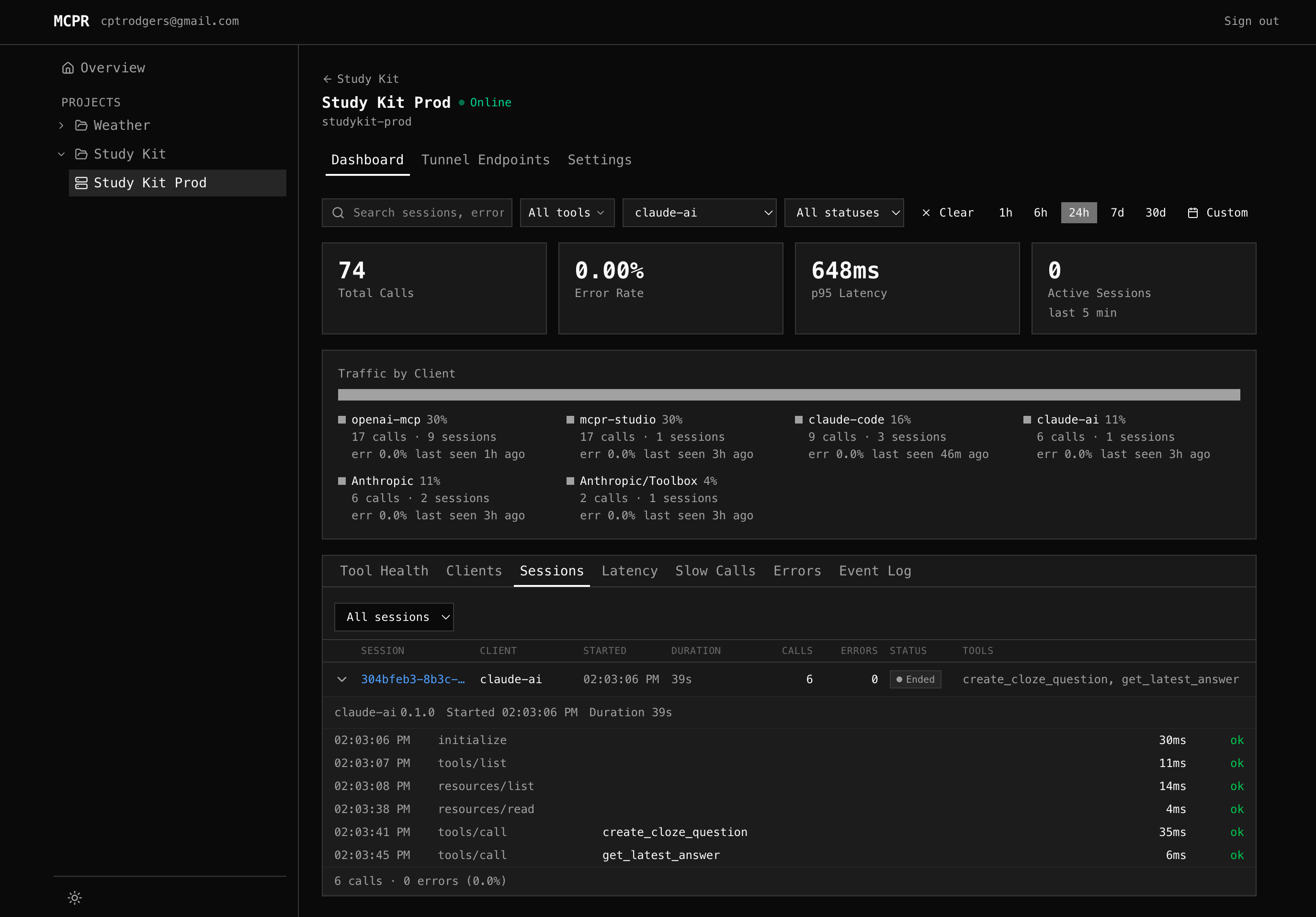
Session 1:
  02:03:06 PM  initialize              30ms  ok
  02:03:07 PM  tools/list              11ms  ok
  02:03:08 PM  resources/list          14ms  ok
  02:03:38 PM  resources/read           4ms  ok
  02:03:41 PM  tools/call  create_cloze_question    35ms  ok
  02:03:45 PM  tools/call  get_latest_answer         6ms  ok
  -- session ended --
One session. One initialize. Claude even runs discovery: tools/list, resources/list, and resources/read, before making any tool calls. All within the same session. Total duration: 39 seconds.
Why this matters more than you think
1. Initialize is not free
Every MCP initialize is a full handshake. The client sends its capabilities, the server responds with its own, they negotiate a protocol version. Some servers also load config, set up database connections, or warm caches during init.
ChatGPT pays this cost on every single tool call. Claude pays it once.
A conversation that triggers 10 tool calls means 10 handshakes on ChatGPT vs 1 on Claude. If your initialize takes 30-50ms, which is modest, you’re adding 300-500ms of pure overhead that your users feel but can’t explain.
2. Your in-memory state is gone
This is the sneaky one. The silent killer.
If your MCP server stores anything in memory per session (user context, conversation history, cached API responses, computed state) ChatGPT will destroy it between tool calls.
# This pattern works perfectly on Claude.
# On ChatGPT, it's a landmine.

session_cache = {}

async def handle_initialize(session_id):
    session_cache[session_id] = {"user": None, "history": []}

async def handle_tool_call(session_id, tool, args):
    # On Claude: same session_id, cache hit, everything works
    # On ChatGPT: NEW session_id, cache miss, data is gone
    cache = session_cache.get(session_id)  # None on ChatGPT!
You test on Claude. Everything works. State persists across tool calls. You ship it. Then ChatGPT users start reporting bugs: results missing context, follow-up calls returning empty data, conversations that seem to “forget” what just happened.
The worst part? Your server logs show zero errors. Every individual request succeeds. The failure is between requests, in the gap where your state quietly vanishes.
3. Tool discovery follows different paths
Look at the session data again. Claude calls tools/list and resources/list during the session. It discovers what’s available, reads resources, then acts on what it learned.
ChatGPT skips all of this. It goes straight to initialize then tools/call. No discovery phase. This suggests ChatGPT caches the tool schema externally and doesn’t need to rediscover it per session. This makes sense given the disposable session model.
This is actually clever engineering on ChatGPT’s side: if you’re going to throw away the session anyway, why waste time discovering what you already know?
How to build MCP servers that survive both models
The rule is simple: design for the worst case.
Make initialize blazing fast
ChatGPT will call it constantly. Every millisecond in init multiplies across every tool call in a conversation.
# Bad: heavy init that ChatGPT will pay for on every tool call
async def handle_initialize(session_id):
    await load_database_schema()      # 200ms
    await warm_embedding_cache()       # 500ms
    await fetch_user_preferences()     # 100ms
    # Total: 800ms per tool call on ChatGPT

# Good: return immediately, defer everything
async def handle_initialize(session_id):
    return {"capabilities": {...}}     # < 5ms
Go stateless or go home
Don’t rely on session-scoped state. Period. Use external persistence keyed on something stable: user ID, API key, anything that survives a session reset.
# Fragile: dies on ChatGPT
session_state = {}

# Robust: works everywhere
async def get_state(user_id):
    return await redis.get(f"user:{user_id}")
How I spotted this
A regular HTTP reverse proxy (nginx, HAProxy, Caddy) would see these as normal HTTP requests. It has no idea that two POST requests belong to different MCP sessions, or that initialize was called twice instead of once.
mcpr is different. It parses MCP JSON-RPC at the protocol level. It knows what initialize means, tracks session IDs, groups tool calls by session, and measures per-method latency. That’s how a pattern like this surfaces in the dashboard instead of hiding in raw HTTP logs.
If you’re running MCP servers in production, this kind of protocol-level visibility is the difference between guessing why things are slow and knowing.
The takeaway
ChatGPT and Claude have fundamentally different MCP session models:
| ChatGPT | Claude | |
|---|---|---|
| Session lifetime | One tool call | Entire conversation turn |
| Initialize calls | Once per tool call | Once per session |
| In-memory state | Lost between calls | Persists within session |
| Tool discovery | Skipped (cached externally) | Done within session |
Design for the disposable model. If your server works on ChatGPT’s session-per-call approach, it’ll work everywhere. The reverse is not true.
mcpr is an open-source MCP proxy (Apache 2.0). See session data like this in the cloud dashboard at cloud.mcpr.app.
- mcp
- observability
- guides